
Colombia
El Oasis Pink Bourbon
£12
How we roast it
Clarity, roasted for filter.
Clarity, origin first
Rare varieties from exceptional farms, roasted so neither roast nor process gets in the way of the place.
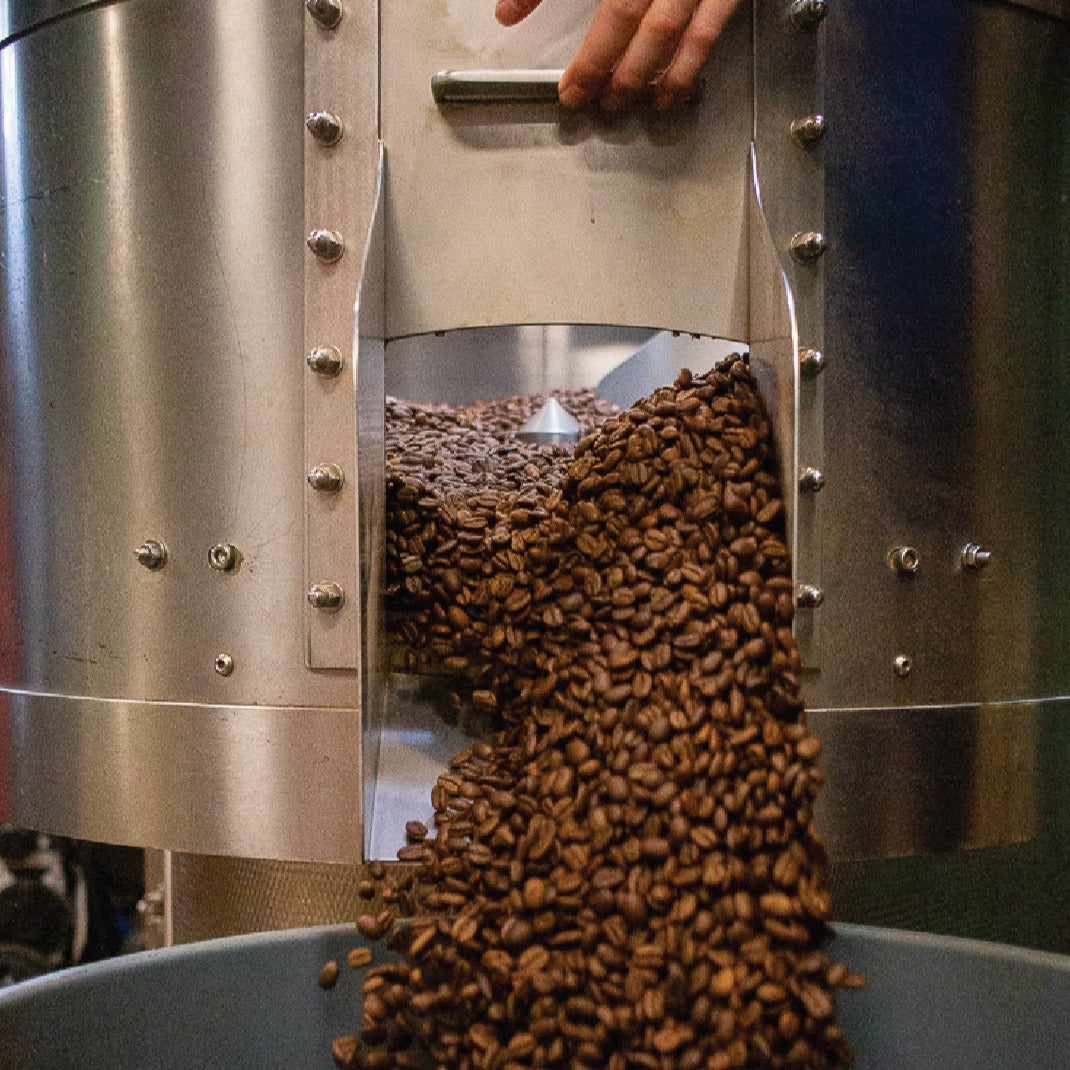
Roasting turns a hard green seed into something you can brew. Lighter roasts keep more of the coffee's own acidity and fruit; darker ones trade it for body, caramel and cocoa, and stand up well to milk.
We check the colour of every roast with an Agtron reading: the higher the number, the lighter the roast.
How it was processed
Washed, after 30 hours under water.
Cherries are selectively harvested, sorted and floated before processing at Cofinet's La Pradera facility. A 30-hour underwater fermentation is followed by pulping, washing and drying on raised beds.
- PickedSelectively harvested: only ripe cherries
- Sorted and floatedSorted, then floated to lift out the lighter cherries
- Fermented under waterWhole cherries, held under water30 hours
- PulpedSkin and fruit taken off the seed
- WashedWhat's left of the fruit washed away
- DriedOn raised beds
In the cup Clean and clear: the place and the variety come through first, with bright, defined acidity.
More about WashedAsk about availability We'll check stock and timing for you
Roasted in ŌtautahiIn stock at C4 HQ
Led by orange blossom, a citrus note. How we taste
The most prominent note leads
We list notes as they stand out, the most prominent first. Each sits in a family, from the broad group out to the specific note, as on the SCA Coffee Taster's Flavor Wheel.
All our flavour families
- Cocoa Dark Chocolate, Milk Chocolate, Cacao Nib, Hazelnut
- Smoky Tobacco, Cereal, Toasted, Ashy
- Floral Jasmine, Rose, Chamomile, Black Tea
- Fruity Berry, Dried Fruit, Tropical, Stone Fruit
- Citrus Lemon, Orange, Grapefruit, Lime
- Sweet Caramel, Honey, Brown Sugar, Vanilla
Brewed as filter, the most prominent note we tasted was orange blossom, in citrus.
Every coffee brews every way
Brew any of our coffees any way you like. Its notes are what we taste brewed the way we built it around; another way brings out others.
Washed Clarity coffees change the most between methods. Coffees whose processing has brought a flavour forward, like a co-ferment, hold it however you brew them.
A note is what we taste
A tasting note is a flavour we find in the cup: at the coffee's age on the day, on our water and recipe. We add no flavourings, and notes are never ingredients or allergens. Taste it weeks later, on other water or another brewer, and the notes will move. And a note is never the whole cup: two coffees can share one and taste nothing alike. A House coffee with citrus is still roast first, the citrus sitting inside a rich, rounded cup; in a Clarity coffee, the citrus is the cup.
- Orange Blossom, White Peach & Mandarin Floral
Clarity. The highest grades and rarest varietals from renowned farms and award-winning producers. Free from roast and process-imparted flavours. Pure brightness, pure clarity, pure experience.
Roasted for filter Why it matters
How we roast it
Lighter keeps more of the coffee's own fruit; darker brings body and chocolate.
Roasting turns a hard green seed into something you can brew. Lighter roasts keep more of the coffee's own acidity and fruit; darker ones trade it for body, caramel and cocoa, and stand up well to milk.
We check the colour of every roast with an Agtron reading: the higher the number, the lighter the roast.
El Oasis
Gaitania, Planadas, Tolima
El Oasis
Gaitania, Planadas, Tolima
El OasisNectario Zúñiga and familyMore about El Oasis
Why altitude matters
Higher farms grow slower, denser coffee, usually brighter and more complex.
Coffee grows in the tropics, and the higher it's planted the cooler the nights. Cooler air slows the cherries as they ripen, so the seeds inside build more sugars and acids before they're picked. That usually means a denser bean and a livelier cup: more fruit and florals up high, more chocolate and nuts lower down.
It's a guide, not a rule. Distance from the equator, shade and soil change it too, which is why the same height can taste different in Brazil and in Ethiopia.
C4 Brew Guide
The recipes we use every day at our roastery café, simple on purpose: water, ratio, grind. Treat them as a starting point, and adjust to what you taste and what your equipment gives you.

How we'd brew it.
- 0:00 Pour to 50 g at 8 g/s
- 0:30 Pour to 100 g at 8 g/s
- 1:00 Pour to 250 g at 3 g/s, very slow
- 2:30–3:00 Done


- 0:00 Pour to 50 g at 8 g/s
- 0:30 Pour to 120 g at 8 g/s
- 1:00 Pour to 190 g at 3 g/s, very slow
- 1:30 Pour to 250 g at 3 g/s, very slow
- 2:30–3:00 Done
For most grinders and most machines. Balanced, and as good black as with milk. Longer than the classic 1:2: at our roast level, 1:2.5 extracts fully and balances the cup, opening it up without thinning it.


A longer ratio at lower pressure, over a shorter shot, for more clarity and acidity.
A note on equipment. 1:3 relies on flat burrs that grind very evenly. On an E65, E80 or Mythos it often tastes watery; if it does, go back to 1:2.5.
Brewed on


- Pre-infusion 2 bar, about 1–2 g/s until the first 1 g (20–40 s)
- Extraction 6 bar, about 5–6 g/s to 18 g
- Post-infusion 2 bar, about 1–2 g/s to 54 g
- 40 s to 1:20 Done
For machines with pressure or flow control: three stages.
Brewed on


Water
Nearly all of the cup is water, and what's in it changes from city to city and season to season.
If your tap water is hard (above about 150 ppm), brew with a soft bottled water nearer 50 ppm; too soft is better than too hard.
If a cup tastes flat or chalky whatever you change, check the water before the recipe.
Adjusting a recipe
These are starting points: keep them simple (water, ratio, grind), then adjust to taste and to your kit.
If a filter tastes thin, dry or harsh, add a gram or so of coffee (15 g to 16–16.5 g) and keep the water the same.
If a long espresso tastes watery, shorten the ratio (1:3 to 1:2.5) before you change the grind.
Taste every shot: how it looks coming out says little about how it tastes, and skimming the crema off often makes a light-roast espresso sweeter.
Keeping it fresh
Coffee keeps best sealed, cool and dark, and frozen keeps longest.
Seal single doses and freeze them; grind straight from the freezer, and don't thaw and refreeze.